Open post

Let The Photo Come To You

Years ago I heard an interview with a street photographer who talked about letting people walk into his shot. He would position the camera with the framing he wanted and then, as people walked through his frame, he would take the photo. I realized later that I often use this technique with birds when shooting sunrises at the beach. I get a tree or a rock lined up with the sun and then wait for a bird to fly through the frame. As you can’t count on birds to always do the right thing, the key is to pick a frame that’s in the vicinity of where they often fly – just as the street photographer would pick frames through which people often walked.

I’ve got an idea for a “come to me” photo that I’m hoping to try out this winter. There’s a parking lot near me where crows love to sit in the trees in large numbers. The leaves are gone now and I’ve seen some potential shots of the crows on the bare tree branches that could look very nice. My plan – on a day when the crows are numerous – is to find a really good set of branches, get framed up, and wait for a crow to enter the frame. BUT there’s a third element that complicates this further… I’d really like some dark, brooding clouds behind the frame.

Now, some might say, in this age of digital manipulation, that I just need a photo of the exact branches, a photo of a crow in a good pose, and a photo of the right clouds – then stick them together. But that’s so new school.

I’m waiting for everything to come together in real time.

Wish me luck!

Open post

Robin Williams’ Final Movie Line

I just discovered that the very last line in a movie by the late, great Robin Williams was:

Smile, my boy. Sunrise!

and I couldn’t agree more 😉

The line was from Night at the Museum: Secret of the Tomb (2014) and he delivered it as Teddy Roosevelt to the character Larry Daley (Ben Stiller) in a final farewell scene. I’d seen the movie but didn’t remember that line. I will now.

Open post

Remembrance Day 2025

I think it’s so important we remember all of the sacrifices that have been made over the years to keep us, and others in the world, free. I wish now I’d taken a photo of the excellent display that was set up in our local hospital auxilliary thrift shop this year – books and paintings and letters and poppies, and of course photographs, one of the best ways to help us remember.

I thought this short video compilation from Legion Magazine captures some of the best war photos from over a hundred years of conflict.


Open post

But They’ll Feel It

I was reading a post on Facebook by Red Carpet about the Orson Welles classic Touch of Evil and came across this quote:

Welles was rehearsing the now-legendary three-minute opening tracking shot — a single take following a car through a Mexican border town. The crew grumbled that it was "impossible," that no one would notice if he just used normal cuts. Welles smiled faintly and said, "The audience may not notice, but they’ll feel it."

This concept of not consciously being aware of something, but feeling it, is an important one, I think, in all areas of life, but art in particular. Often we can't articulate why a piece of art works for us or doesn't - we just feel it.

When I'm doing landscape photography I'm constantly moving (physically or in-camera) until I get the composition that feels right. I'm making conscious choices about changing the composition, but knowing when I've got something "right" is a feeling - a sense of completeness or satisfaction. Knowing may be a strong word there - believing I have something right would probably be more accurate. Whether it's the placement of elements within the shot or the angle or the way the light falls, you keep trying different approaches.

And it's that desire to find the right combination - not being satisfied with the first try - that seems to me a crucial part of the artistic temperament.

Open post

Putting More Telephoto Into Your Landscape Photography

I was intrigued by the title of a recent Fstoppers article - Stop Using a Wide Angle Lens for Landscape Photography - mostly because I only use a wide-angle about 20% of the time, so maybe I'm a bit of an outlier.

The piece was making the point that many landscape photographers default to a wide-angle lens, with the result that they may be missing interesting shots that only a telephoto or mid-range lens would pick up. The article uses a great composite shot - shown above - to illustrate what the wide-angle is seeing while the inset shows what a telephoto from that same position could be seeing.

The article isn't saying one lens is better than the other, but rather that landscape photographers would do well to allow themselves to see potential beyond the wide shot. And I couldn't agree more. In fact, I tend to start with the small elements I'm seeing in the landscape around me, and only "think wide" if something really grabs me.

Here's a recent example: I had driven to the beach and it was cloudy, but nothing that I hadn't shot many times before. I was about to drive off when I noticed some breaks in the cloud that - isolated by a telephoto lens - might make for a nice shot. On the left, you see the shot that I had in my mind when I was surveying the beach, while on the right you can see the wide shot from roughly the same place. The wide shot's nothing to write home about and the break in the clouds is barely visible, but by zooming in I think the break in the cloud takes on more drama.

These are taken straighten out of the camera (I tend to shoot a bit underexposed). I see some nice potential in the telephoto shot - probably will work with that in black and white to bring out more of the drama that I see in it.

Open post

A Different Take on a Carnival Ride

I always love when someone sees my images in a very different way. While I was doing a market recently, a woman was looking at Ride the Clouds when she remarked “It looks like the wind blowing away the bits off a dandelion.” Brilliant! I’d never thought of it that way.

We talked more about the way the clouds seem to swirl in keeping with the whirling riders and how the use of black and white turns a joyful, sunny day into something a little bit mysterious or even foreboding, but her description has captured my mind, and I don’t know that I’ll be able to see the image any other way!

Open post

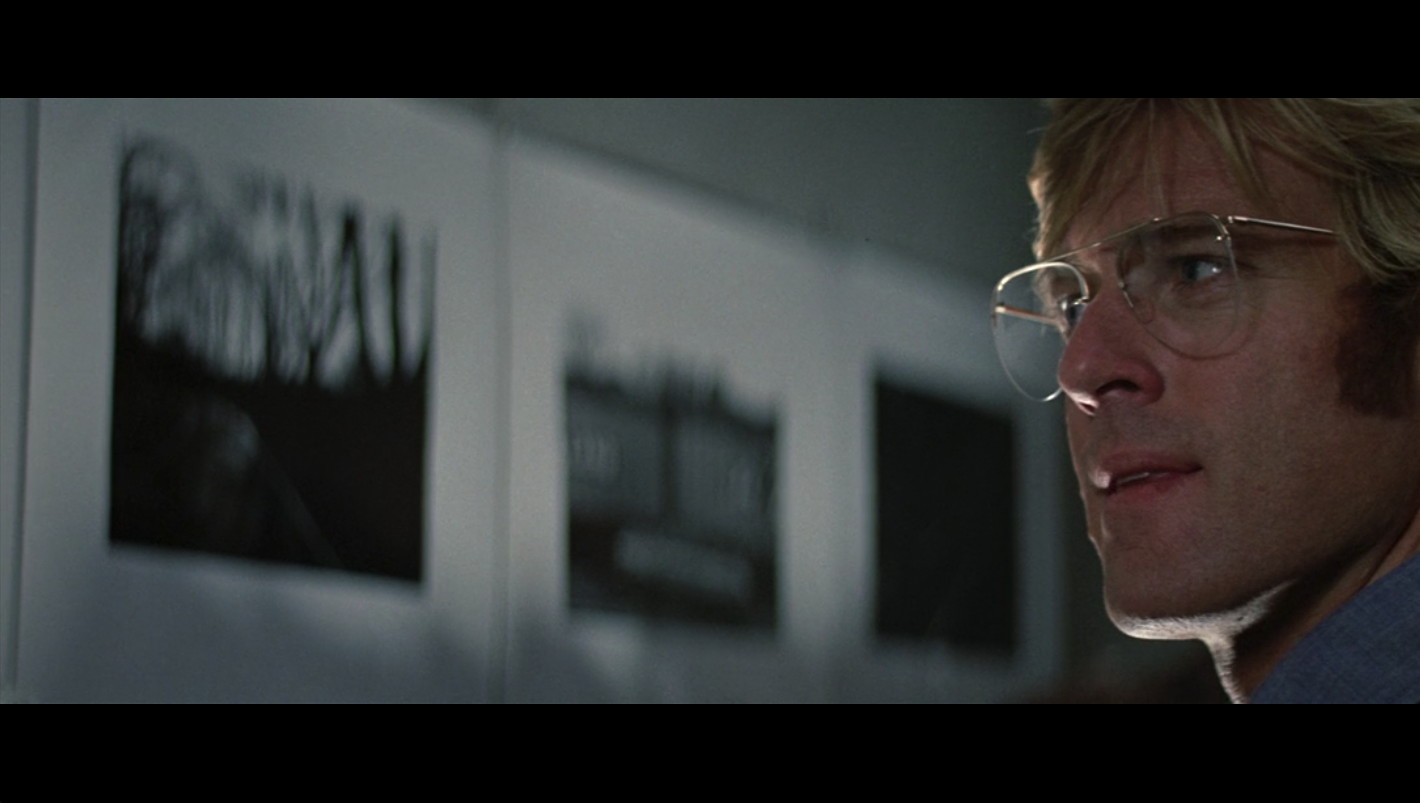
Three Days of the Condor and Lonely Pictures

I recently re-watched Sidney Lumet's 1975 thriller Three Days of the Condor after many decades. While I never consciously remembered much of the movie, as the scenes unfolded I realized how deeply ingrained they were in my memory, and the extent to which they helped make me a fan of the spy/political thriller genre. But there was one scene in particular which had another influence on me, when Robert Redford's character ponders the photos in the apartment of Faye Dunaway's character - a photographer. As the camera pans across the black and white prints, he comments:

"Lonely pictures."

"So?"

"You're funny. You take pictures of empty streets and trees with no leaves on them."

"It's winter."

"Not quite winter. They look like November. Not autumn, not winter; in between... I like them."

There was something about those pictures and the mood of the music Lumet used, and the comment about loneliness, which all came together for me. And I remember feeling, as a young man watching the movie for the first time, that this was the kind of photography I related to. And, looking back on it now, that they all convey elements of my photographic style.

1
Scroll to top